


Why You Should Consider Microneedling
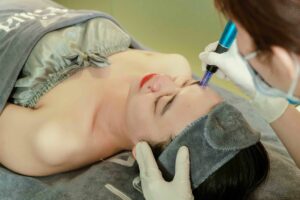
There’s something beautifully simple about microneedling: tiny, controlled micro-stimulation encouraging the skin to activate its own natural repair processes. Rather than simply adding product to the skin, microneedling works by stimulating the skin’s own remodeling response.
For clients looking for a minimally invasive way to achieve smoother texture, increased skin firmness, softened fine lines or reduced
acne scars, you can’t go wrong with microneedling.
The skincare space has a bewildering and ever-increasing array of options with new techniques emerging constantly and a variety of technologies (laser, radiofrequency, injectables, fillers) to choose from. Some techniques are so new that even providers don’t know their long-term results.
Take fillers for example. A doctor using an MRI machine recently discovered that fillers with hyaluronic acid can not only remain in the skin longer than filler manufacturers suggest, but also may migrate and even expand. (Read more here: https://www.newsweek.com/mri-
It’s worth it to do your due diligence and heed track records when considering cosmetic procedures.
A Brief History of Microneedling
Microneedling, on the other hand, actually has a long history and confirmed therapeutic value. The idea of using controlled injury to stimulate skin repair goes back at least 100 years. Microneedling tools date back to 1905, when German dermatologist Ernst Kromayer used motor-powered dental burs to treat certain skin conditions, including scars and hyperpigmentation.
Modern microneedling devices began emerging in the 1950s with the development of motorized tattoo guns. Dermatologists noted that scars improved when tattoo guns were used without pigment. Further experimentation by M.D.’s revealed that needling devices could improve skin texture and firmness by promoting collagen production.
Modern dermal needling evolved in the mid-90s when Canadian plastic surgeon Andre Camirand discovered that facial scars improved dramatically when treated with tattoo needles. The first skin needling device was born in the mid-90s, when South African plastic surgeon Des Fernandes introduced a small stamp with fine needles, which he used to successfully treat wrinkles, sagging skin, and stretch marks.
What began as an approach to remodel scar tissue has evolved into a widely used aesthetic treatment for skin rejuvenation, scars, stretch marks and hair loss.
What Actually Happens During Microneedling?
Professional-grade microneedling pens operate with powerful, consistent speed and depth control. The adjustable needle depths and speed settings allow skincare professionals to customize treatments for each client’s specific skin type or concern.
These pens typically range from 11 to 36 needles per sterilized cartridge depending on the targeted area. The motorized pens drive these tiny needles straight in and out of the skin at a 90-degree angle.
It’s not necessary to cause bleeding during a microneedling treatment. Collagen is most efficiently remodeled with a needle depth of .5 mm, which rarely causes bleeding even in sensitive skin.
Professional microneedling pens cannot be compared to home devices such as dermal rollers, which may have inconsistent needling depths and surfaces – resulting in tears rather than clean punctures on the skin.
Why Microneedle?
The goal of the tiny injuries created by microneedling lies in the resulting wound-healing cascade. Growth factors and other signaling processes are activated, encouraging fibroblast activity and the production and remodeling of collagen and elastin. The goal is controlled stimulation rather than damage to the skin’s surface.
Think of it as giving the skin a carefully calibrated reason to rebuild. Over time, this remodeling can translate into improvements in skin texture, firmness, fine lines and the appearance of certain scars. It takes one month for new skin cells to regenerate after a treatment. In general, at least four monthly treatments are recommended. Because you continue to age, treatments can be continued with monthly maintenance sessions. With consistent treatment, you can expect:
Smoother Skin Texture
Microneedling can help improve uneven skin texture. For clients who feel their skin has become rougher or less refined with age, this can be an important part of a comprehensive skin-rejuvenation plan.
Softening the Appearance of Fine Lines
Collagen production naturally declines with aging. Healing skin after a microneedling session fights wrinkles by supporting dermal remodeling.
A clinical review of microneedling literature found substantial improvement in fine lines, wrinkles, scars, and other signs of aging, with relatively limited downtime and side effects. (https://pubmed.ncbi.nlm.nih.
Improving the Appearance of Acne Scars
Microneedling has become particularly well known for scar treatment. The controlled injury and subsequent collagen remodeling may help soften the appearance of certain depressed acne scars.
Research reviews support microneedling as a useful minimally invasive approach for scars, although results can vary according to scar type, skin characteristics, treatment depth and the number of treatments. (https://pmc.ncbi.nlm.nih.gov/
Supporting a Firmer, More Refined Appearance
A series of treatments may help improve the overall appearance of skin laxity and texture as collagen remodeling develops over time. See this study on an increase in skin firmness on the neck after four microneedling treatments: https://academic.oup.com/asj/
A Minimally Invasive Approach
One of the attractions of microneedling is that it can stimulate the dermis while producing relatively limited disruption of the epidermis compared with more aggressive resurfacing procedures. Reviews have found that adverse effects are rare. You should expect temporary redness. Occasionally scaling or post-inflammatory hyperpigmentation can occur with certain skin types.
Treating Hair Loss
Microneedling can help regrow hair as well as regenerate skin. A 2016 study found that microneedling not only stimulates hair growth, but also increases a vascular growth factor associated with blood vessel formation and follicle support.
Microneedling and Cosmetic Acupuncture
Combining microneedling with cosmetic acupuncture is an excellent way to not only enhance collagen production of the face, but also lift and tone the skin. Cosmetic acupuncture treatments include a number of points on the scalp and ear area designed to provide a lifting effect for eyebrows, cheeks and jowls.
Acupuncture facial rejuvenation can be traced back to the imperial courts of the Qin Dynasty in 206 BC. This treatment improves the appearance of the skin, along with improving eye health, sinus issues while reducing jaw, neck and facial tension.
Let’s be Realistic
MIcroneedling is a time-tested, safe and effective strategy for anti-aging. When combined with facial acupuncture and skin care products, this powerhouse trifecta rejuvenates your skin while enhancing your health as well.
At Heritage Acupuncture, we can help you determine a strategy for skin care that’s as time-efficient or as comprehensive as you like. Whether you’re looking for the safest, most effective treatment or want to address skincare and overall health, we have the skills and experience. Let us know your goals and we’ll build a plan together.